

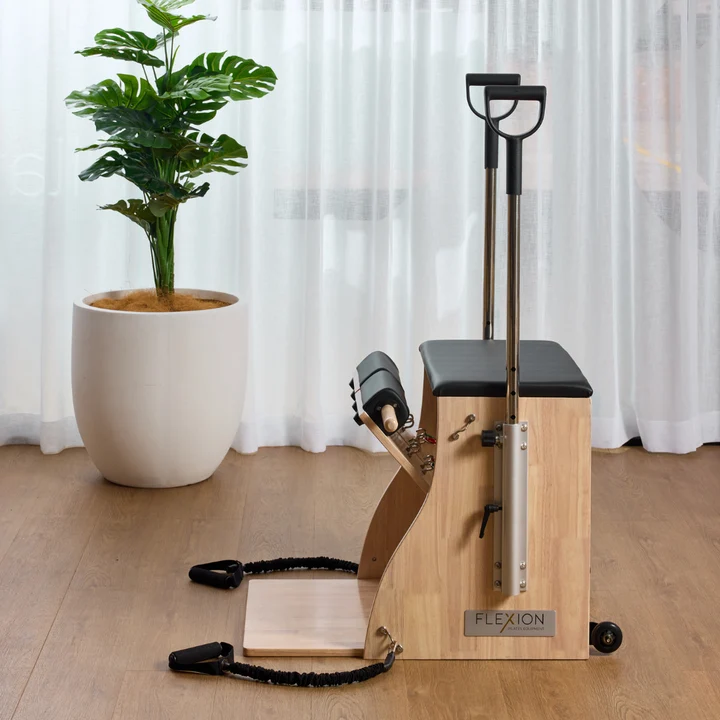
Unlike mat Pilates, it adds adjustable resistance, which helps tailor sessions to beginners, athletes, and people returning from injury.
What is a Wunda Chair, exactly?
A Wunda Chair is a spring loaded chair with a padded seat and a single pedal, sometimes split into two halves for independent leg work. The pedal moves against spring tension, letting instructors dial resistance up or down depending on the person and the exercise.
It is used for seated, standing, side lying, and hands supported movements, so they can train legs, glutes, core, shoulders, and posture in one session.
How does a Wunda Chair work compared with a Reformer?
A Wunda Chair creates resistance through a pedal that they press down or control upward against springs. A Reformer uses a moving carriage and straps, which can feel more supported for some beginners.
The chair is often less forgiving because they must stabilise their body on a smaller surface. That challenge is the point, as it can improve control, balance, and coordination quickly when taught well.
Why do Australians choose a Wunda Chair for small spaces?
A Wunda Chair suits apartments, spare rooms, and garages because it has a small footprint and is easy to position against a wall. In many Australian homes, space is the main barrier to buying large gym equipment, and the chair solves that.
Some models are also designed to be moved more easily, which matters for renters or anyone sharing a space with family.
What muscles does a Wunda Chair target most?
A Wunda Chair heavily targets the core, glutes, and legs, especially through standing and single leg work. It also trains shoulder stability and upper back strength when they do presses, pikes, and supported plank variations.
Because the pedal is spring loaded, they get both strength work on the press down and control work on the return. That makes it useful for building strength without rushing reps.
Who benefits most from using a Wunda Chair?
A Wunda Chair often suits people who want strength plus stability, not just flexibility. They might benefit most if they need better balance, stronger hips, or more core control for sport, work, or daily life.
It can also be a smart option for those bored of mat routines, since the spring resistance and exercise variety keep progress measurable.
Is a Wunda Chair good for beginners?
A Wunda Chair can be beginner friendly, but it depends on supervision and program choice. Many chair exercises are advanced, yet a trained instructor can start them with supported seated work, light springs, and simple ranges.
In Australia, they will often find chair sessions offered as 1:1 Pilates or clinical Pilates, which is usually the safest entry point before joining larger group classes.
How does a Wunda Chair help with balance and fall prevention?
A Wunda Chair challenges balance because they often work standing on one leg, stepping, or controlling the pedal while maintaining posture. That makes it useful for improving proprioception, ankle and hip stability, and confidence during movement.
For older Australians, balance training can be a practical goal, especially if they want to stay active with walking, golf, bowls, or gardening.
Can a Wunda Chair support injury rehab in Australia?
A Wunda Chair is commonly used in Australian physiotherapy and clinical Pilates settings because springs allow controlled loading. They can strengthen key areas like hips, knees, and shoulders while keeping movement precise and adjustable.
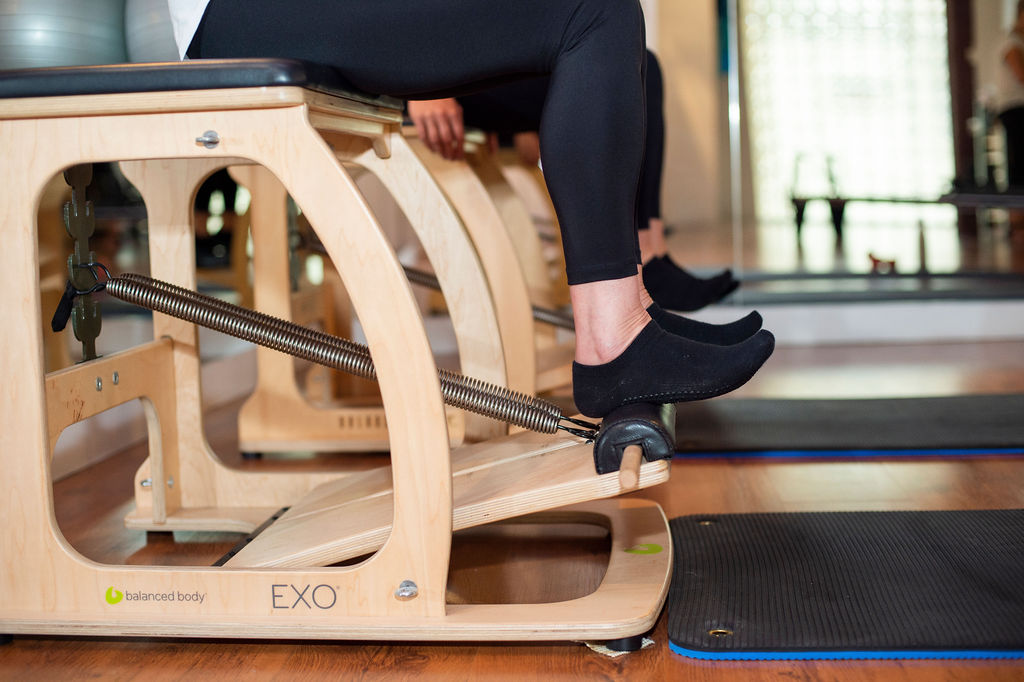
It is not a replacement for medical advice, so they should work with an AHPRA registered health professional or qualified clinical Pilates provider when pain, post-surgery limits, or complex conditions are involved, while choosing the best Pilates chair for studios in Australia based on safety, support, and appropriate clinical use.
Who should be cautious with a Wunda Chair?
A Wunda Chair demands stability, so people with unmanaged vertigo, acute disc symptoms, or severe balance issues may need extra screening and modifications. Some exercises also load wrists and shoulders, which can flare symptoms if they rush into harder progressions.
If they are pregnant, newly postpartum, or managing osteoporosis, they should ask for tailored programming and avoid positions that do not suit their stage or risk profile.
What types of workouts can they do on a Wunda Chair?
They can use it for lower body strength, athletic conditioning, core control, or low impact cardio style circuits. Many sessions combine slow strength sets with mobility focused transitions, which can feel like a mix of Pilates and functional training.
Common categories include seated footwork, step ups, hamstring presses, pikes, triceps presses, side work, and rotational core patterns, all scaled by spring choice and range.
How often should they use a Wunda Chair to see results?
Most people notice changes in control and posture within a few weeks if they train consistently, often two to three sessions per week. Strength gains depend on progressive loading, exercise selection, and whether they also walk, lift, or play sport.
In Australian studio settings, they may start with weekly private sessions, then add a second session once technique feels solid and recovery is good.
What should they look for when buying a Wunda Chair in Australia?
They should prioritise stable frame construction, smooth pedal action, reliable spring settings, and comfortable padding. A split pedal can add versatility, but it is not essential for everyone, especially if they are new.
It also helps to check local warranty support, spare parts availability, and delivery costs within Australia, since heavy equipment freight can change the true price quickly.
How do they get started safely with a Wunda Chair?
They should start with an assessment or an introductory session so an instructor can choose appropriate springs and teach setup. Good coaching will focus on controlled tempo, safe knee tracking, neutral spine options, and breathing that supports effort.
If they are training at home, they can still benefit from a few in studio sessions in their city, then follow a structured plan rather than copying advanced moves from social media.
What is the main takeaway on who benefits most?
A Wunda Chair is best for people who want a time efficient, space smart way to build strength, balance, and whole body control. They benefit most when they value technique and progression, whether their goal is better daily movement, sport performance, or supported rehab.
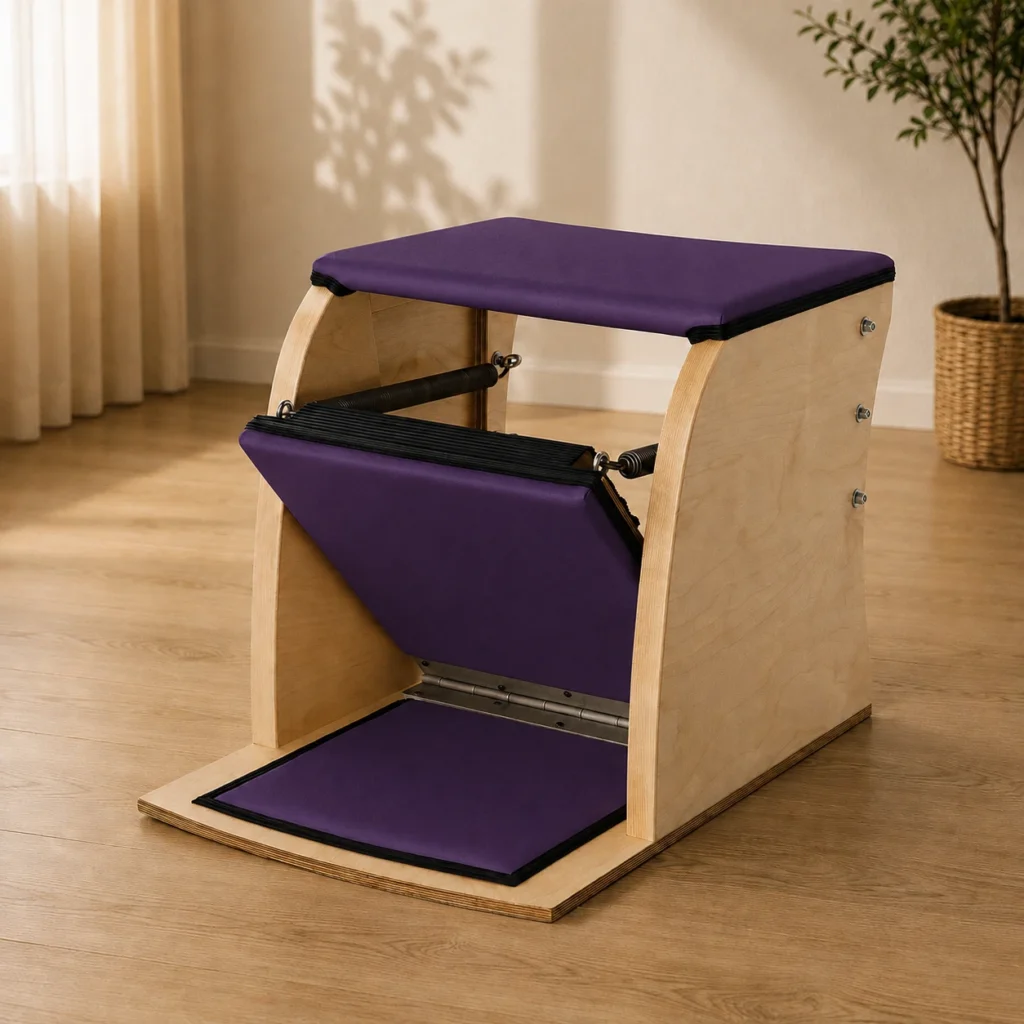
With the right guidance in an Australian studio or clinic, it can become one of the most effective pieces of Pilates equipment they will ever use.
FAQs (Frequently Asked Questions)
What is a Wunda Chair and how does it work?
A Wunda Chair is a compact Pilates apparatus featuring a spring-loaded pedal and padded seat, designed to build strength, control, and balance. The pedal moves against adjustable spring tension, allowing tailored resistance for seated, standing, side lying, and hands-supported exercises that target legs, glutes, core, shoulders, and posture.
How does the Wunda Chair differ from a Pilates Reformer?
Unlike the Reformer which uses a moving carriage and straps for support, the Wunda Chair relies on a spring-loaded pedal requiring users to stabilise their body on a smaller surface. This makes the chair less forgiving but excellent for rapidly improving control, balance, and coordination through challenging exercises.
Why is the Wunda Chair popular in Australian homes with limited space?
The Wunda Chair’s small footprint makes it ideal for apartments, spare rooms, or garages common in Australian homes. It easily fits against walls and some models are portable, making it suitable for renters or families sharing space while still delivering full-body Pilates workouts.
Who benefits most from using a Wunda Chair?
Individuals seeking to improve strength plus stability—especially core control, hip strength, and balance—benefit greatly from the Wunda Chair. It’s suitable for athletes, people recovering from injury under supervision, those bored of mat Pilates routines, and older adults aiming to enhance balance and fall prevention.
Is the Wunda Chair suitable for beginners?
Yes, when used under professional supervision with appropriate programming. Beginners typically start with supported seated exercises using light springs and simple ranges of motion. In Australia, 1:1 Pilates or clinical Pilates sessions provide safe entry points before progressing to group classes.
How can I safely get started with the Wunda Chair in Australia?
Begin with an assessment or introductory session led by a trained instructor who can select proper spring resistance and teach correct setup. Focus on controlled tempo, safe knee alignment, neutral spine positioning, and breathing techniques. Attending initial studio sessions ensures safe progression rather than attempting advanced moves inde
<script type="application/ld+json">
{
  "@context": "https://schema.org",
  "@type": "BlogPosting",
  "mainEntityOfPage": {
    "@type": "WebPage",
    "@id": "https://baramericasatx.com/what-is-a-wunda-chair-and-who-benefits-most-from-it/"
  },
  "headline": "What Is a Wunda Chair and Who Benefits Most From It?",
  "image": [
    "https://baramericasatx.com/wp-content/uploads/2026/09/Untitleddesign-2025-01-06T122141.736_720x.webp",
    "https://baramericasatx.com/wp-content/uploads/2026/09/Wunda-Chair-108-1.jpg",
    "https://baramericasatx.com/wp-content/uploads/2026/09/Archival_Wunda_Chair_-_Bflex_New_Purple__64443.webp"
  ],
  "author": {
    "@type": "",
    "name": "Sam Dwyer",
    "url": "https://baramericasatx.com/author/admin/"
  },
  "publisher": {
    "@type": "Organization",
    "name": "Bar America",
    "logo": {
      "@type": "ImageObject",
      "url": "https://baramericasatx.com/wp-content/uploads/2025/06/logo-bar.png"
    }
  },
  "datePublished": ""
}
</script>